Background
A middle-aged adult living in a housing association flat was referred to 1to1 Healthcare’s Occupational Therapy service following increasing difficulty with personal care and mobility. They live with their spouse, who provides daily support despite managing their own long-term health condition.
The individual has multiple complex health issues including diabetes, obesity, sleep apnoea, hypertension, chronic pain, and depression. These conditions significantly affected mobility, transfers, and confidence, making even basic activities such as bathing and accessing the community increasingly difficult.
Both the individual and their spouse expressed a strong desire to maintain independence, dignity, and normal family life. They wished to continue living in their current home, but the environment no longer supported their physical needs safely.
Assessment and Person-Centred Approach
The occupational therapist carried out a holistic assessment focusing on what truly mattered to the individual — not just the physical barriers, but also their emotional wellbeing and sense of identity.
They spoke about their frustration and embarrassment at needing help with personal care and how this had led to withdrawal and low mood. They also shared how much joy and purpose they found in a home-based hobby that gave structure to their day. The OT recognised that supporting access to this meaningful activity was just as important as improving physical safety.
Through open discussion, empathy, and respect for the person’s choices, the OT developed a plan that placed their goals at the centre. This reflected the Care Act’s key principle of promoting wellbeing, choice, and control.
Strength-Based Practice
Despite significant physical and emotional challenges, the assessment revealed clear personal and environmental strengths:
- Strong motivation to regain independence and remain active.
- Ability to manage daily administration and finances.
- A supportive, committed spouse providing consistent care.
- Engagement in a meaningful home activity that supported mental health.
The occupational therapist built on these strengths rather than focusing on limitations, using them as the foundation for designing practical, sustainable solutions that improved independence while protecting the carer’s wellbeing.
Collaborative and Joint Working
The case required coordinated input across several agencies. The occupational therapist led a multi-disciplinary approach, ensuring that recommendations were realistic, evidence-based, and achievable:
- Housing Association: Collaborated to assess feasibility of adaptations and ensure property modifications complied with building and accessibility standards.
- GP and Medical Team: Provided medical reports supporting the need for major adaptations, confirming the individual’s physical limitations.
- Mental Health Services: Liaised to ensure that both the individual’s and spouse’s emotional health were supported, with access to therapy and carer wellbeing services.
- Local Authority Adaptations and Grants Team: Clinical reasoning and supporting evidence were presented to secure funding through the Housing Grants and Care Act 2014 frameworks.
- Care Coordination: The OT maintained regular communication between all involved parties to ensure progress and minimise delays, providing advocacy and reassurance for the couple throughout.
This collaborative approach demonstrated how effective occupational therapy bridges health, housing, and social care to deliver person-centred outcomes.
Intervention and Recommendations
Major Adaptation:
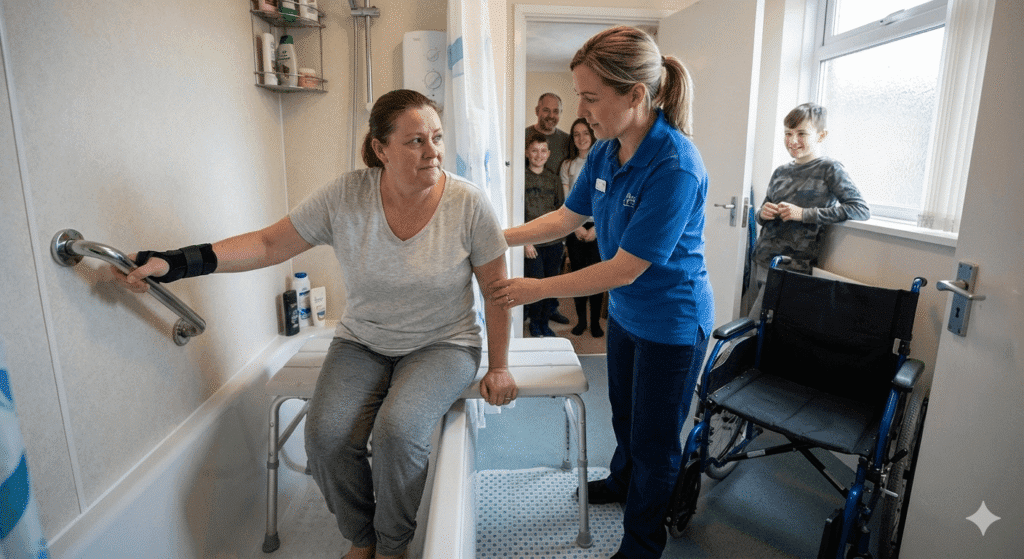
- Replacement of the traditional bath with a level-access shower, providing safe and independent access.
- Installation of a bariatric shower seat to support weight-bearing and reduce fall risk.
- Provision of a bariatric-height toilet to facilitate safer transfers and reduce strain for both the individual and carer.
Environmental Adaptation:
Designation of a disabled parking bay near the building entrance to improve access to transport and community participation.
Carer Support and Mental Health Interventions:
- The OT liaised with mental health professionals to ensure ongoing therapy and emotional support for both partners.
- Referral for a Carer’s Assessment to ensure the spouse’s own health and wellbeing were protected.
- Education on safe moving and handling techniques to reduce injury risk and anxiety during care tasks.
- Information and signposting to local carer networks and respite services.
These combined interventions created a safe, dignified environment that promoted physical independence and emotional resilience for both partners.
Outcomes and Impact
Within weeks of installation, the individual reported:
- Increased independence in personal care, reducing reliance on their spouse.
- Improved confidence and reduced anxiety about accessing the bathroom and community.
- Better mood and motivation to re-engage in meaningful daily activities.
The spouse described a noticeable reduction in physical strain and emotional stress. They felt reassured that their partner was safe and could manage more independently. This renewed sense of balance in the household improved the couple’s relationship and overall wellbeing.
The OT’s careful coordination ensured that adaptations were completed efficiently, and funding processes were managed smoothly. The outcome was a cost-effective and sustainable long-term solution that prevented potential crisis or future care escalation.
Why This Case Matters
This case illustrates how occupational therapy, when guided by the Care Act 2014, delivers meaningful and lasting change by:
- Promoting wellbeing and dignity through person-centred planning.
- Preventing crisis by addressing safety and mental health early.
- Recognising and supporting carers as equal partners in care.
- Collaborating across services to achieve efficient, joined-up outcomes.
- Building on strengths to empower individuals, not define them by limitations.
Conclusion
Through empathy, professional insight, and collaborative problem-solving, 1to1 Healthcare’s Occupational Therapy service helped this family reclaim safety, privacy, and independence.
The case demonstrates the heart of effective adult social care — person-centred, strength-based, and grounded in partnership.
By tailoring solutions around what truly matters to people, occupational therapy transforms not only how individuals live in their homes, but how they feel about their lives.
At 1to1 Healthcare, we believe independence is more than movement — it’s confidence, dignity, and belonging.