
Specialist Occupational Therapy - Accessible, Responsive, Person-Centred
Independent Occupational Therapy services helping adults and children live more safely, confidently, and independently at home and in their community.
Who Are We?
1to1 Healthcare was founded on the belief that high-quality Occupational Therapy should be accessible, responsive, and genuinely person-centred. We provide specialist Occupational Therapy services across the UK, supporting people of all ages to live as independently, safely, and confidently as possible in their daily lives.
Our HCPC-registered therapists have extensive experience across acute, community, and specialist settings. We combine strong clinical expertise with practical, real-world solutions that work in people’s homes, schools, workplaces and communities.
Every case is closely monitored and tailored both to the person’s needs and to the commissioning organisation’s objectives, with clear communication at every stage.
How Our Occupational Therapists Can Help
Why Choose 1to1 Healthcare?
Person-centred & strength-based
We focus on what people can do, not just what they struggle with, and build interventions around their strengths and goals.
Clear, outcome-focused reporting
Our reports are structured, jargon-free and aligned to Care Act requirements, making it easy for commissioners and families to act on recommendations.
Robust clinical governance
All therapists are HCPC-registered and work to evidence-based guidelines, with regular supervision and quality assurance.
Joined-up working
We liaise with housing officers, surveyors, social workers, GPs and therapy teams to keep everyone informed and moving in the same direction.
Transparent case monitoring
Every contract is supported by a dedicated contact person and a regularly updated overview of case progress.
Who We Work With
We work across the UK with local authority adult and children’s services, NHS trusts and community health teams, housing and adaptations teams, charities and voluntary organisations, case managers and other health professionals, as well as self-funding individuals and families.

Real Stories, Real Outcomes


Feedback From Our Clients & Partners
“The OT report was comprehensive, clear and enabled us to move forward quickly with the right adaptations.”
Local Authority Commissioner
Client
As a customer service manager myself, I recognise that people are often quick to raise complaints but less likely to take the time to acknowledge positive experiences. I feel this is especially important given the challenges of customer-facing roles.
Client
I would like to take a moment to provide some feedback on the support your team offered during a recent assessment. The level of assistance and communication throughout the process has been outstanding and has continued beyond the initial assessment, which is very much appreciated.
Client
The support provided was delivered with genuine care and professionalism and reflects a team member who is a real asset and deserving of recognition.
Client
Frequently Asked Occupational Therapy Related Questions:
What Is an Occupational Therapy Assessment?
An Occupational Therapy (OT) assessment is a detailed, person-centred evaluation designed to understand how an individual’s health, environment, and daily activities interact. The goal is to identify what supports or adaptations are needed to help a person live safely, independently, and with the best possible quality of life.
An OT assessment looks at:
- How a person manages everyday tasks such as washing, dressing, cooking, or moving around their home.
- Physical abilities (strength, balance, coordination, mobility).
- Cognitive and sensory skills (memory, planning, perception, communication).
- Home environment – including layout, access, and safety.
- Equipment or adaptations that could improve independence and reduce care needs.
- Carer involvement and manual handling needs.
- Following the assessment, the OT provides a comprehensive report with recommendations, which may include equipment, home adaptations, therapy, or changes to routines and support.
Types of Occupational Therapy Assessments
OT assessments vary depending on need and setting. Common types include:
- Functional Assessment – Evaluates how a person performs day-to-day tasks and identifies areas of difficulty.
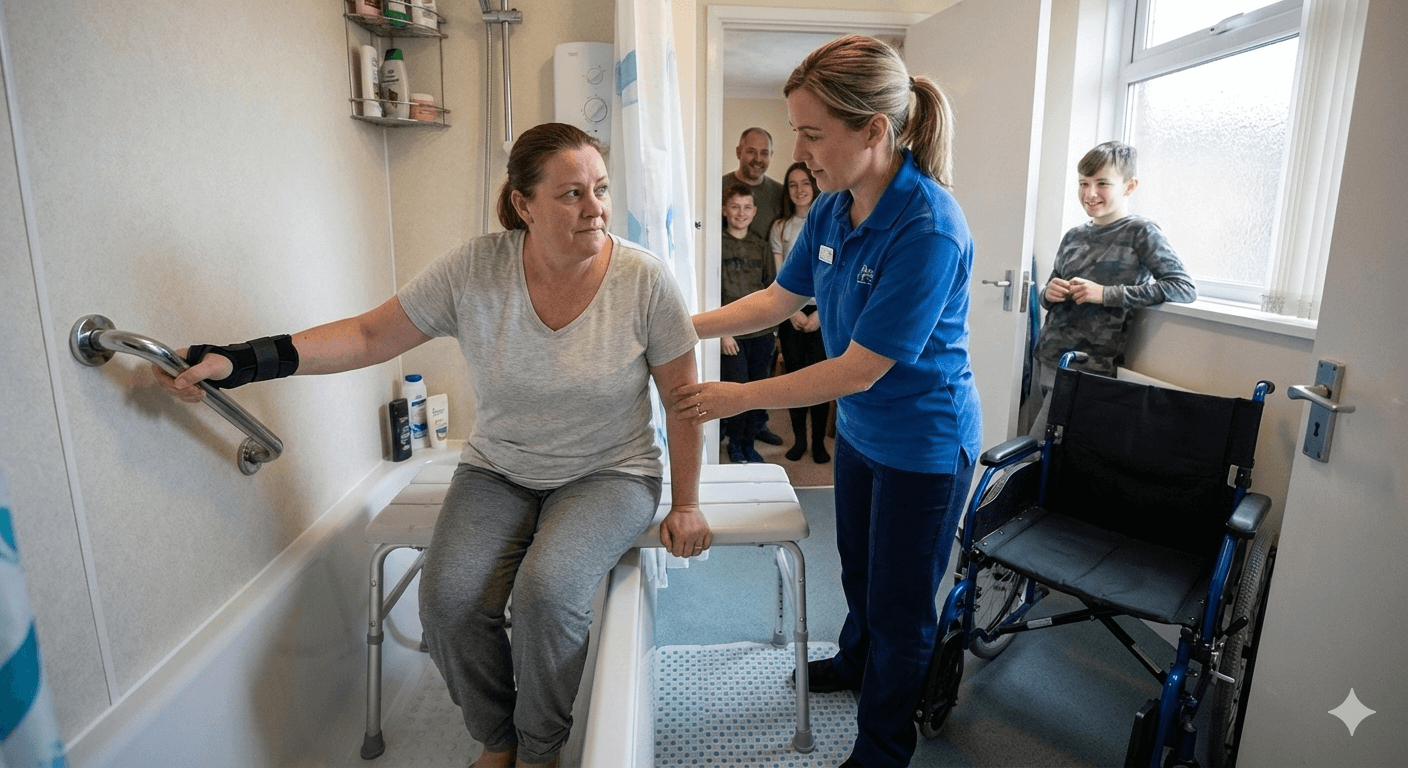
- Housing and Adaptation Assessment – Reviews the home environment to recommend equipment or adaptations such as grab rails, stairlifts, or level-access showers.
- Moving and Handling Assessment – Focuses on safe transfer techniques and appropriate equipment for carers or family members.
- Rehabilitation Assessment – Identifies goals and therapy interventions to restore or maintain functional ability after illness or injury.
- Seating and Postural Assessment – Ensures correct seating, positioning, and pressure relief for comfort and safety.
- Workplace or Return-to-Work Assessment – Reviews work environments and tasks to recommend adjustments or ergonomic solutions.
- Paediatric / Sensory Assessment – For children, assessing developmental, sensory, and motor needs at home or in school.
Conditions That May Require an OT Assessment
Occupational therapy can support a wide range of health conditions, including:
- Stroke, brain injury, or neurological disorders (e.g., Parkinson’s, MS)
- Dementia and cognitive decline
- Musculoskeletal conditions or chronic pain
- Arthritis or joint replacements
- Learning disabilities or developmental delay
- Sensory processing difficulties
- Long-term illness or frailty
- Post-operative rehabilitation
- Mental health and anxiety impacting daily function
The 7 Pillars of Occupational Therapy Practice
The Royal College of Occupational Therapists (RCOT) defines seven key pillars of practice that guide professional standards and clinical quality:
- Professionalism – Acting ethically, safely, and in line with professional standards.
- Values-Based Practice – Promoting dignity, choice, and inclusion.
- Evidence-Based Practice – Using research and best practice to guide decisions.
- Leadership – Influencing and improving services and outcomes.
- Communication – Building effective relationships with clients and colleagues.
- Education and Learning – Maintaining professional growth and sharing knowledge.
- Service Development and Innovation – Continuously improving quality and efficiency.
These principles ensure that occupational therapy remains person-centred, accountable, and responsive to changing needs.
The Four Major Types of Assessment (in OT practice)
Within occupational therapy, assessments can broadly be grouped into four categories:
- Initial / Screening Assessment – To identify needs and determine next steps.
- Comprehensive Functional Assessment – Detailed analysis of how someone performs daily tasks.
- Environmental Assessment – Evaluates home, workplace, or community settings for safety and accessibility.
- Review / Reassessment – Conducted after interventions or changes in condition to evaluate progress and adjust recommendations.
How Much Does a Private OT Assessment Cost?
Costs vary depending on location, complexity and the nature of the assessment. Below are rough guide prices for private clients.
As a general guide in the UK:
- Initial home-based OT assessment can range from: £250–£450
- Comprehensive functional or housing assessment can range from: £400–£650
- Complex assessments (e.g. neurological, equipment, or multidisciplinary) can range from: £650–£900+
These costs usually include:
- Home or virtual visit
- Full clinical assessment
- Written report with recommendations
- Liaison with other professionals (if required)
At 1to1 Healthcare, assessments are tailored to individual and organisational needs, ensuring value, quality and practical outcomes.
Why choose 1to1 Healthcare to conduct OT assessments?
We work with NHS partners, local authorities, housing providers, charities and private clients to deliver assessments that make a tangible difference — balancing quality with cost-effectiveness.
- Highly experienced, HCPC-registered occupational therapists
- Person-centred and Care Act–aligned approach
- Detailed reports with clear, actionable recommendations
- Fast, flexible appointments and responsive service
- Proven results in improving independence and reducing care needs
Need Occupational Therapy Support?
Whether you’re a commissioner, professional or family member, we’re here to help you find practical, evidence-based solutions.
- Discuss a potential referral
- Request a quote
- Ask about waiting times