Background
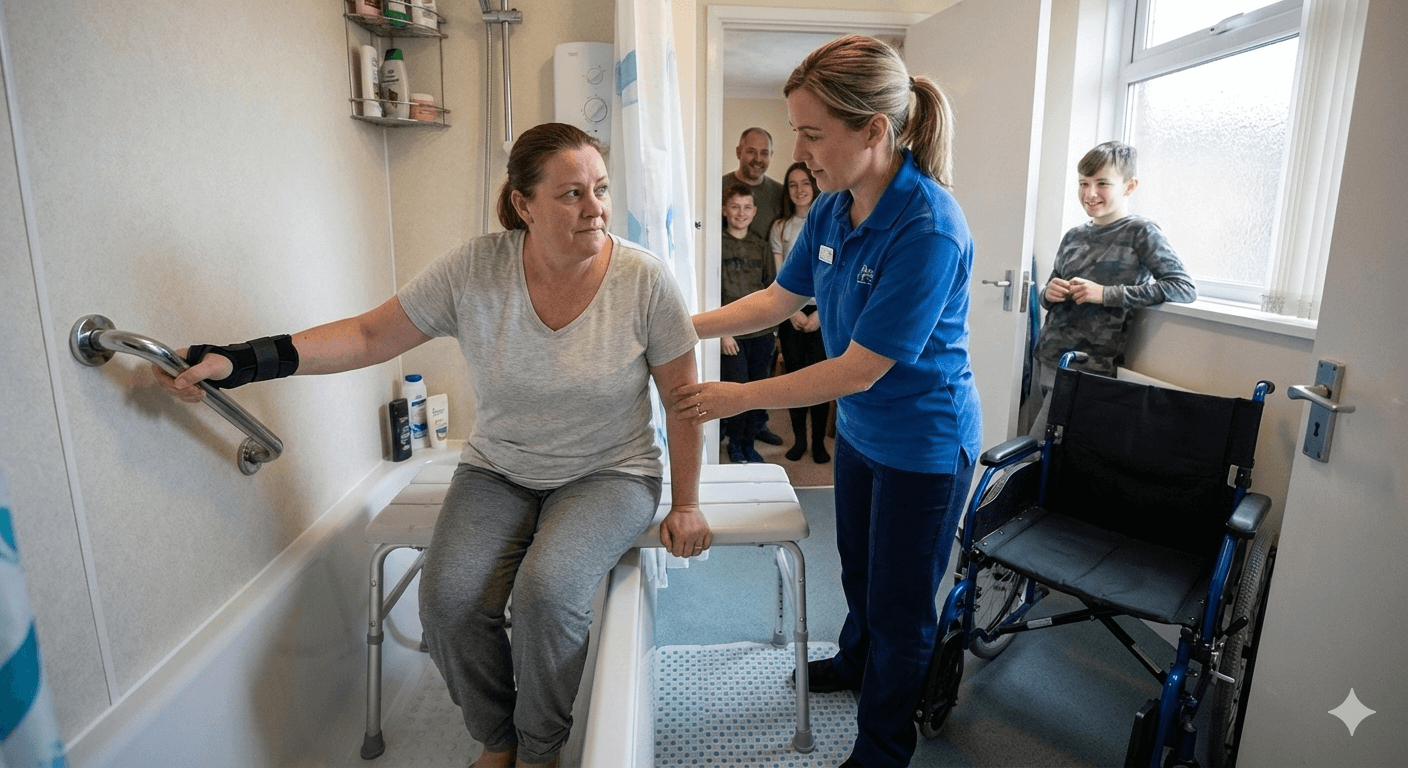
A 49-year-old woman was referred to 1to1 Healthcare’s Occupational Therapy service after struggling to access her bath safely at home. She lives in a housing association property with her partner and two children. Her medical history includes Chronic Obstructive Pulmonary Disease (COPD), thyroid dysfunction, and long-term musculoskeletal issues affecting her mobility and balance.
She has also undergone several upper limb surgeries, resulting in significant weakness and reduced grip strength in her left hand. These physical limitations made personal care increasingly difficult and unsafe. Alongside her physical health challenges, she lives with Post-Traumatic Stress Disorder (PTSD) and depression, both of which impact her motivation, confidence, and daily functioning.
At the time of referral, she reported several recent falls when attempting to use her bath. She felt anxious and embarrassed about relying on her teenage daughter to help her bathe — a situation that had deeply affected her dignity and emotional wellbeing.
Assessment and Findings
The assessment took place in her home and explored both physical and emotional aspects of daily living.
Key findings included:
- Unsafe bath transfers due to poor balance, reduced strength, and a history of falls.
- Tearfulness and emotional distress when discussing loss of independence.
- Strong family support network but increasing carer strain within the household.
- Continued independence with stairs, general transfers, and household tasks.
The occupational therapist recognised that while the service user faced multiple barriers, she remained highly motivated to regain control over her daily life. This strength — combined with the family’s commitment — became the foundation of the intervention plan.
Our Approach: Strength-Based and Person-Centred
In line with the Care Act 2014, the assessment focused not only on what she couldn’t do, but on her abilities, resilience, and aspirations.
She expressed a clear desire to be independent in personal care, explaining that her sense of privacy and self-worth were being eroded by her reliance on others. The occupational therapist acknowledged these feelings, working collaboratively to rebuild her confidence and identify realistic goals that could improve both physical safety and emotional wellbeing.
To address her mental health needs, the OT introduced techniques to reduce anxiety during daily routines — such as paced breathing and structured rest periods — and encouraged her to engage with her GP and community mental health team for ongoing psychological support.
Joint working was key to achieving sustainable outcomes. The OT liaised with:
=Within two weeks, a hospital bed was delivered and installed in Maria’s ground-floor living space. This single change transformed the way care was provided. Transfers became easier and safer, and Maria was able to rest in greater comfort.
The district nursing and palliative care teams began regular visits, providing ongoing medical and emotional support. The new equipment reduced physical strain on Erica, who said she finally felt she could “breathe again” knowing her mother was safe and comfortable.
Maria expressed that she felt more secure and rested. Her comfort improved noticeably, and the peace of mind of seeing her daughter less anxious gave her renewed emotional strength.
Intervention and Recommendations
Short-Term Measures
- Provision of a bath board to allow safe assisted bathing while waiting for permanent adaptations.
- Education on safe transfer techniques and energy conservation strategies.
- Emotional reassurance and goal-setting to help rebuild confidence in managing daily tasks.
Long-Term Plan
- Recommendation for a level-access shower to enable safe, independent bathing and reduce falls risk.
- Referral for Carer’s Assessment for her daughter, recognising the impact of informal caring responsibilities.
- Continued liaison with the mental health team for ongoing emotional support and coping strategies.
Outcomes
The combined physical and emotional interventions achieved meaningful change. The bath board allowed her to maintain a level of independence immediately, while plans for permanent adaptation were progressed through the local housing adaptations team.
As her confidence grew, she began managing more of her personal care independently. Her anxiety reduced, and she described feeling “more like herself again.” Regular input from the community mental health team helped her manage PTSD symptoms more effectively, while the planned shower installation provided reassurance and hope for long-term stability.
Impact and Reflection
This case demonstrates how occupational therapy within adult social care can bring together clinical insight, emotional understanding, and practical problem-solving to achieve lasting outcomes.
By applying a strength-based, person-centred approach, the OT helped restore not only physical safety but also dignity and confidence. The intervention aligned fully with Care Act principles, promoting:
- Wellbeing: Improved safety, privacy, and emotional stability.
- Prevention: Reduced falls risk and potential crisis intervention.
- Personalisation: A tailored solution built around her goals and preferences.
- Partnership: Joint working across health, housing, and social care services.
Conclusion
Through timely occupational therapy and effective partnership working, this woman regained her sense of control and independence — physically, emotionally, and socially.
The case reflects what 1to1 Healthcare stands for: delivering compassionate, practical solutions that empower people to live safely, confidently, and with dignity in their own homes.